Exploring Future Blockchain Technology Trends: A Guidance Framework
Table of Contents

Discover essential blockchain technology trends shaping the future and learn key concepts that will help you navigate upcoming innovations effectively.
Blockchain technology is rapidly transforming various sectors, offering new opportunities and reshaping traditional systems. Exploring future blockchain technology trends is essential for staying informed and leveraging these developments. This guidance framework will provide insights into key trends, help you understand blockchain concepts, and prepare you for upcoming changes.
Key Blockchain Concepts: Foundation for Future Trends
To explore blockchain trends effectively, understanding foundational concepts is crucial. Here are some key terms explained:
Blockchain Protocols and Smart Contracts
A blockchain protocol is a set of rules that dictate how data is processed and stored on the blockchain. These protocols ensure secure transactions by maintaining a uniform standard across the network.
Smart contracts are self-executing agreements with the terms directly encoded. They automatically perform actions when predefined conditions are met, reducing the need for intermediaries.
Consensus Mechanisms: Proof of Work vs. Proof of Stake
Consensus mechanisms are essential for transaction validation and network security. Understanding their differences helps in exploring blockchain trends:
| Mechanism | Process | Advantages | Disadvantages |
|---|---|---|---|
| Proof of Work (PoW) | Computes complex puzzles | Highly secure | Energy-intensive |
| Proof of Stake (PoS) | Validators selected by stake | Energy-efficient | Less tested over time |
These mechanisms underpin blockchain security and efficiency, with PoS gaining popularity due to its lower environmental impact.
Layer 1 and Layer 2 Solutions: Enhancing Blockchain Scalability
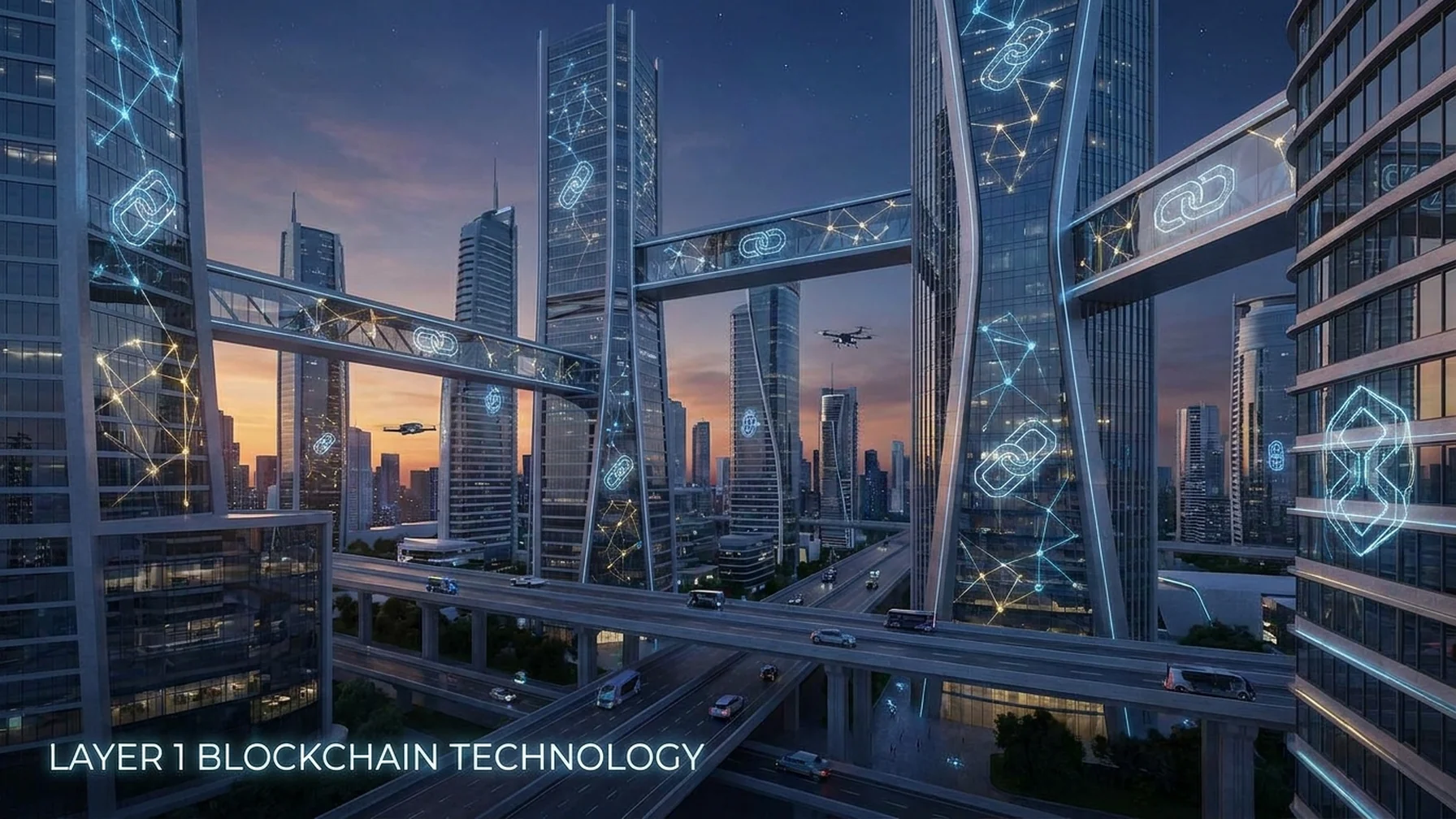
Understanding Layer 1 and Layer 2 solutions is vital for grasping blockchain scalability trends. Layer 1 refers to the base blockchain layer, where core transactions occur. Examples include Bitcoin and Ethereum.
Layer 2 solutions build on Layer 1 to improve scalability by processing transactions off-chain. This reduces congestion and fees. Ethereum's rollups are a prime example of Layer 2 solutions enhancing transaction speed.
Comparison of Layer 1 and Layer 2
Here's a comparison to clarify these layers:
| Feature | Layer 1 | Layer 2 |
|---|---|---|
| Function | Primary transactions and data storage | Scalability improvements |
| Examples | Bitcoin, Ethereum | Rollups, Payment Channels |
| Transaction Handling | On-chain | Off-chain with Layer 1 updates |
Layer 2 solutions are crucial for making blockchain technology more accessible and efficient.
Emerging Trends in Blockchain Technology
Exploring future blockchain technology trends involves keeping an eye on emerging developments that have the potential to transform industries:
- Decentralized Finance (DeFi): Expanding financial services without traditional banks, enabling peer-to-peer interactions.
- Interoperability: Improving communication between different blockchain networks.
- Asset Tokenization: Representing real-world assets as digital tokens to enhance liquidity.
- Regulatory Developments: New regulations providing clarity and fostering innovation.
- Sustainability Efforts: Developing environmentally friendly blockchain solutions.
These trends indicate the growing impact of blockchain technology on global systems and industries.
Steps to Explore Blockchain Technology Trends
To effectively explore blockchain trends, consider the following steps:
- Research the latest advancements in blockchain protocols and consensus mechanisms.
- Analyze the impact of regulatory changes and government policies on blockchain adoption.
- Evaluate the integration of blockchain with emerging technologies like AI and IoT.
By following these steps, you can gain valuable insights into blockchain's transformative potential.
Verifying Crypto News to Avoid Misinformation
With the influx of crypto news, misinformation is a risk. Here's how to verify news effectively:
- Cross-check details with multiple trusted sources.
- Look for official statements from blockchain projects or exchanges.
- Be cautious of sensational headlines; conduct thorough research.
These practices help ensure informed decisions based on accurate information.
Blockchain Upgrades and Governance: Managing Changes
Blockchain networks undergo upgrades to enhance functionality. These changes can be categorized into hard and soft forks:
Understanding Hard Forks
A hard fork is a major protocol change that is not backward-compatible, requiring all nodes to upgrade. It may lead to a new blockchain if consensus is not achieved.
Soft Forks: A More Compatible Update
In contrast, a soft fork is a backward-compatible update allowing only some nodes to upgrade. This enables the introduction of new features without altering the existing structure.
Effective governance ensures seamless implementation of upgrades, maintaining network security and functionality.
The Future of Blockchain Technology
The future of blockchain technology is ripe with possibilities, including greater adoption of DeFi, integration with IoT, and advancements in scalability and interoperability. While blockchain may not replace traditional banking systems, it offers enhanced transparency and efficiency. As the technology matures, it holds the promise of reshaping digital interactions and data management securely.
Understanding these trends empowers you to navigate the evolving landscape of blockchain technology and maximize its benefits.